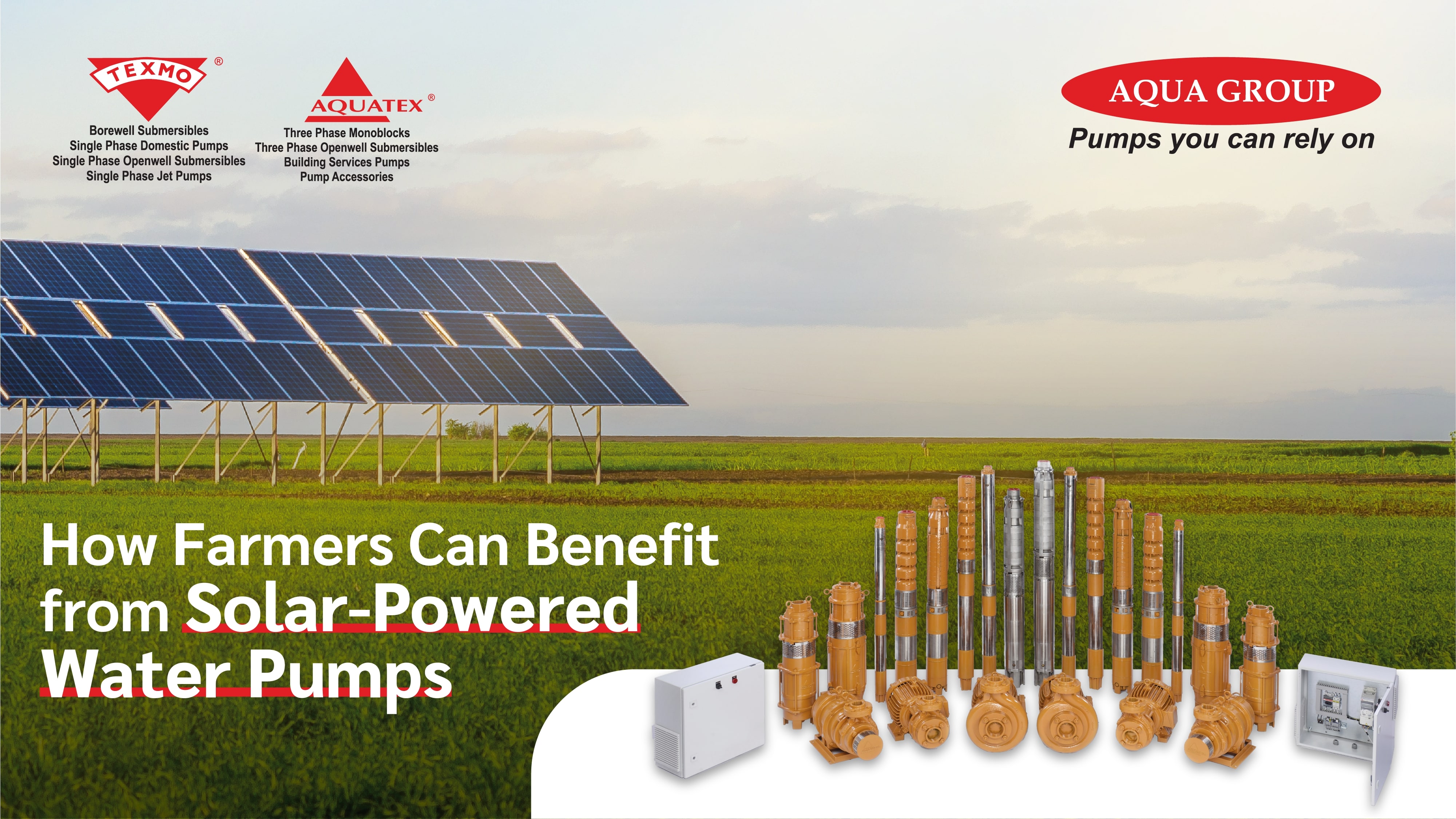
How Farmers Can Benefit from Solar-Powered Water Pumps
19-12-2025
For many Indian farmers, irrigation is one of the biggest recurring challenges. Power cuts, low voltage, rising diesel prices, and unpredictable water availability often disrupt farm operations. As a result, crop cycles suffer, costs increase, and productivity drops.
Solar-powered water pumps are changing this reality across India.
They provide a clean, reliable, and cost-effective way to pump water using the most abundant resource farmers already have sunlight.
This blog breaks down how solar pumps work, why they’re becoming essential in modern agriculture, and how schemes like PM-KUSUM make them more accessible to small and marginal farmers.
What Is a Solar-Powered Water Pump?
A solar water pump uses solar panels to convert sunlight into electricity, which powers an electric pump. It can draw water from borewells, open wells, rivers, ponds, canals, and deliver it directly to the field or water-storage systems.
Solar pumps come in two main types:
- Solar Surface Pumps – ideal for canals, ponds, tanks, and shallow water sources.
- Solar Submersible Pumps – used for borewells and deeper water levels.
Both are designed to run without grid electricity or diesel — making irrigation independent, dependable, and cost-effective.
The Core Benefits of Solar Water Pumps for Indian Farmers
1. Irrigation Without Dependence on Electricity
In rural India, power cuts during peak hours are common. Solar pumps ensure continuous irrigation during sunlight hours — when farmers need it most.
2. Significant Savings on Diesel and Electricity Costs
Diesel prices rise almost every year. Electric pumps face escalating tariffs.
Solar pumps run on free energy — sunlight — reducing yearly irrigation expenses drastically.
3. Higher Crop Productivity
Timely irrigation leads to:
- Better plant health
- Higher yields
- Ability to grow water-sensitive crops
- Opportunity to cultivate more than one crop per year
4. Ideal for Remote and Off-Grid Villages
Even in areas where electricity has never reached or is unreliable, solar pumps work seamlessly.
5. Low Maintenance, Long System Life
Solar panels and BLDC/AC pumps require minimal maintenance. No fuel, no engine oil, fewer breakdowns — reducing long-term costs.
6. Reduced Carbon Footprint
Solar pumps produce zero emissions.
That means cleaner air, less soil contamination, and more sustainable farming practices.
7. Works Best with Drip & Sprinkler Irrigation
Solar pumps pair well with micro-irrigation systems, helping farmers:
- Save water
- Improve crop quality
- Enhance efficiency
- Reduce labor effort
PM-KUSUM Yojana: Making Solar Pumps Affordable for Farmers
The Pradhan Mantri Kisan Urja Suraksha Evam Utthan Mahabhiyan (PM-KUSUM) is one of India’s biggest government schemes supporting solar agriculture.
Under the scheme:
Farmers get heavy subsidies on solar pumps
In many cases, farmers pay only 10% to 30% of the total system cost, depending on their state and category.
Options for both off-grid and on-grid solar pumps
- Component-B : Standalone solar pumps (3 HP to 7.5 HP most popular).
- Component-C : Solarisation of existing grid-connected pumps.
Possibility of additional income
In some regions, surplus power generated can be sold to the grid — turning farmers into “power producers.”
This scheme reduces upfront cost and makes solar irrigation achievable for small and marginal farmers who were earlier unable to afford modern pumping solutions.
Why Aqua Group Believes Solar Pumping Is the Future of Indian Agriculture
Aqua Group has always focused on building durable, farmer-centric water pumping solutions. TEXMO Solar pumps align with this mission by offering:
- Consistent, grid-free irrigation
- Lower lifetime running cost
- Environmentally responsible pumping
- Reliable technology for everyday farming needs
Whether for small farms or large agricultural fields, solar pumps bring long-term value, convenience, and independence to farmers across India.
Conclusion: A Smarter, More Reliable Way to Irrigate Your Fields
Solar-powered water pumps are more than just an alternative; they’re a long-term investment in better farming. They reduce irrigation costs, improve crop reliability, and give farmers freedom from electricity issues and rising diesel prices.
With strong government support through PM-KUSUM, adopting solar irrigation has become easier than ever.
For any farmer looking for sustainable, affordable, and future-ready irrigation — TEXMO solar pumps are the next major step forward.